
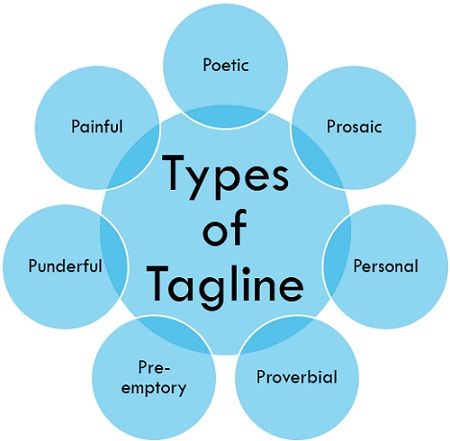
A memorable phrase can make a business, product, or campaign easier to recognize. But what is a tagline, and how is it different from a slogan, headline, or motto? These terms are often used interchangeably, even though they can serve different purposes.
A tagline is generally a short, memorable phrase associated with a brand or business. It helps communicate an idea, personality, promise, or position in a way that people can quickly understand and remember.
In this guide, you'll learn the tagline meaning, see practical examples, understand how a tagline works in business and marketing, and discover the difference between a tagline and related terms such as slogans, headlines, and loglines.
What Is a Tagline?
A tagline is a short, memorable phrase used to communicate the identity, positioning, or central idea of a brand, business, product, or campaign.
In simple terms, a tagline gives people a quick impression of what a brand represents. It is usually much shorter than a mission statement and is designed to be easy to remember.
For example, a business might use a phrase that communicates:
- What it stands for
- What makes it different
- The experience it wants customers to associate with it
- A key benefit
- Its overall personality
That is the basic tagline definition.
If you're asking what is a tag line, the answer is the same: "tagline" and "tag line" refer to the same concept. The one-word spelling is more common in modern marketing usage.
Tagline Meaning and Definition
The tagline meaning can vary slightly depending on context, but the core idea remains consistent: it is a concise phrase that reinforces a brand or message.
A simple tagline def is:
A short phrase used to represent or reinforce a brand, business, product, or marketing message.
Another way to define tagline is to think of it as a verbal signature for a brand.
This explains what does tagline mean in practical terms. It is not simply any short sentence. A strong tagline has a specific purpose and is connected to the identity or positioning of the business.
What Is a Tagline in Business?
What is a tagline in business? It is a concise phrase that communicates an important aspect of a company's identity, value proposition, or brand personality.
A business tagline can help answer questions such as:
- What does the company stand for?
- What feeling should customers associate with the brand?
- What makes the business memorable?
- What general promise does the brand communicate?
For example, a technology company might use a tagline focused on simplicity, while a luxury brand could use language that emphasizes quality or exclusivity.
So, what is a business tagline? It is essentially a short brand statement designed to strengthen recognition and positioning.
What Is a Tagline for a Business?
When someone asks what is a tagline for a business, they are usually looking for the short phrase displayed alongside a company's brand identity.
A business might place its tagline:
- Under its logo
- On its homepage
- In advertisements
- On packaging
- In social media profiles
- On printed marketing materials
- In presentations
However, a tagline does not need to appear everywhere. Its value comes from being relevant, memorable, and consistent with the brand.
What Is a Tagline in Marketing?
What is a tagline in marketing? A tagline is a concise brand message used to reinforce positioning and create a memorable association with a company, product, or campaign.
Marketing teams often use taglines to make a brand easier to recognize across different channels.
A good tagline should generally be:
- Short — easy to read and remember.
- Relevant — connected to the brand.
- Distinctive — not interchangeable with competitors.
- Clear — understandable without unnecessary complexity.
- Consistent — suitable for repeated brand use.
A short tagline can be more effective than a long explanation when the audience already has some context about the brand.
Tagline vs Slogan: What's the Difference?
The tagline vs slogan distinction can be confusing because the words are sometimes used as synonyms.
Generally, a tagline is associated more closely with a brand's enduring identity, while a slogan may be created for a specific marketing campaign, product, or promotional message.
TaglineSloganOften associated with the overall brandOften associated with a campaign or productCan remain in use for a long periodMay change between campaignsReinforces brand identitySupports a specific marketing messageUsually broad enough to represent the brandCan be more campaign-specific
This is the practical difference between tagline and slogan.
However, terminology varies between companies and marketing professionals. Some businesses use "slogan and tagline" interchangeably.
Slogan or Tagline?
If you're wondering whether something should be called a slogan or tagline, consider its role.
If the phrase represents the broader brand identity, "tagline" may be more appropriate. If it supports a particular advertising campaign, product, or promotion, "slogan" may better describe it.
That is why the slogan vs tagline question does not always have one universal answer.
What Is a Slogan?
A slogan is a short, memorable phrase used to communicate a marketing, advertising, political, or organizational message.
Unlike a brand tagline, a slogan can be temporary and campaign-specific.
For example, a company could create one slogan for a seasonal campaign and use a different slogan for a new product launch while maintaining the same overall brand tagline.
The distinction is useful, but context matters. In everyday marketing language, tagline slogan terminology can overlap.
Headline vs Tagline
Another common question is headline vs tagline.
A headline is usually designed to attract attention and introduce a specific piece of content, advertisement, article, or offer. A tagline is more closely associated with a brand, product, or broader identity.
For example:
Headline:
"Get More Customers From Organic Search"
Tagline:
"SEO That Works for Your Business"
The headline can change depending on the page or campaign. The tagline may remain consistent across the brand.
This difference becomes particularly important on websites.
What Is a Tagline on a Website?
What is a tagline on a website? It is usually a short phrase placed near the company name, logo, hero section, or other prominent branding area to communicate what the business represents.
A website tagline can help visitors quickly understand the company's positioning.
For example:
Company Name
Simple tools for smarter business decisions.
The phrase gives context without requiring a long explanation.
A tagline can also support branding and make a website feel more distinctive, but it should not replace a clear description of the company's actual products or services.
Tagline of a Product
A tagline of a product is a short phrase associated with a particular product or product campaign.
It can emphasize a benefit, characteristic, experience, or emotional idea connected to the product.
For example, a fitness product might use a phrase centered around convenience or performance, while a software product could focus on simplicity.
The important distinction is that a product tagline does not necessarily represent the entire company.
Tagline vs Motto
The difference between motto and slogan is another area where terminology overlaps.
A motto usually expresses a guiding principle, belief, or philosophy. A slogan is generally more promotional and marketing-oriented.
A brand may therefore have:
- A motto expressing its philosophy
- A tagline reinforcing its identity
- A slogan supporting a particular campaign
In real-world branding, these boundaries can overlap, but the intended purpose provides a useful way to distinguish them.
Tagline vs Logline
The logline vs tagline distinction is especially relevant in entertainment.
A logline is typically a brief summary of a movie, television show, book, or story's central premise. A tagline is a short promotional phrase designed to create interest or reinforce the work's identity.
For example:
Logline:
A detective must solve a mysterious disappearance before the investigation exposes a secret from his own past.
Tagline:
"Some secrets never stay buried."
The logline explains the story. The tagline creates intrigue.
How to Create a Good Tagline
Writing a strong tagline starts with understanding the brand rather than trying to produce a clever sentence.
1. Define the brand's core idea
Ask what you want customers to remember after seeing the brand.
2. Identify the audience
The language should make sense to the people you want to reach.
3. Focus on one central message
Trying to communicate five ideas in one phrase usually creates a weak result.
4. Keep it concise
A short tagline is generally easier to remember and use consistently.
5. Make it distinctive
Avoid phrases that could describe almost any company in the same industry.
6. Say it aloud
A tagline should sound natural when spoken, not just look good on a screen.
7. Test it in context
Place the phrase beside the logo, on a website header, and in a sample advertisement. A tagline that works in isolation may not work well visually.
What Makes a Tagline Effective?
A strong tagline usually combines clarity with memorability.
Look for these characteristics:
- Relevant: It fits the brand.
- Simple: It does not require excessive explanation.
- Memorable: People can recall it later.
- Distinctive: It does not sound generic.
- Flexible: It works across appropriate marketing channels.
- Authentic: It reflects what the brand can reasonably communicate.
Avoid making claims that the business cannot support. A clever phrase may attract attention, but a misleading one can damage trust.
Common Tagline Mistakes
Making it too long
A tagline should not become a paragraph. If it requires several sentences to explain the brand, it is probably trying to do too much.
Being too generic
Phrases such as "Quality You Can Trust" can apply to countless businesses. Distinctive positioning is usually more useful.
Using complicated language
If customers need to interpret the phrase before understanding it, the tagline loses some of its immediate impact.
Copying competitors
A tagline should contribute to a unique brand identity rather than resemble another company's positioning.
Treating the tagline as the entire marketing strategy
A tagline supports branding. It does not replace strong products, useful content, customer service, search optimization, or a clear value proposition.
How a Tagline Works With SEO
A tagline can support branding on an SEO-focused website, but it should not be treated as a primary ranking tactic.
For example, an SEO company might use a tagline that communicates its approach while keeping the page's title, headings, body content, and metadata focused on relevant search intent.
The tagline can contribute to:
- Brand recognition
- Website messaging
- User understanding
- Consistent brand presentation
However, SEO pages still need useful information, relevant keywords, strong site architecture, and content that satisfies the user's query.
For businesses working on organic visibility, the tagline should complement—not replace—the broader SEO strategy.
Final Thoughts
So, what is a tagline? It is a short, memorable phrase that helps communicate a brand's identity, positioning, or central idea.
Understanding the tagline meaning becomes easier when you compare it with related terms. A tagline generally supports the broader brand, a slogan can support a specific campaign, a headline introduces a particular piece of content or advertisement, and a logline summarizes a story's central premise.
The best tagline is not necessarily the funniest or cleverest phrase. It is the one that is relevant, distinctive, easy to understand, and appropriate for the brand. When used consistently, a well-written tagline can become an important part of a company's overall identity.

Comments
No comments yet.