
Penalty Checker: How to Find and Fix Google SEO Penalties
30
Sep 2026
A sudden drop in organic traffic or rankings can leave website owners asking, “Is my site penalized by Google?” A penalty checker can help investigate that question, but no automated tool can reliably diagnose every cause of a ranking decline on its own.
Google-related traffic losses can result from many factors, including manual actions, algorithmic changes, technical SEO problems, indexing issues, lost backlinks, or changes in search behavior. That is why effective diagnosis requires more than running a domain through a Google penalty checker tool.
This guide explains how to check whether a website may have an SEO penalty, how to distinguish a penalty from other ranking problems, and what steps can support Google penalty recovery.
What Is an SEO Penalty?
An SEO penalty is a negative search visibility consequence associated with violating a search engine's spam policies or other quality requirements. A manual action is explicitly communicated through the relevant search platform, while algorithmic changes may affect sites without a direct penalty notification.
A useful SEO penalty checker process therefore combines several sources of evidence rather than relying on one automated score.
Common warning signs include:
- A substantial and unexplained organic traffic decline
- Important pages disappearing from search results
- Rankings dropping across many keywords
- A manual-action notification
- Search visibility declining after significant SEO changes
- Pages becoming difficult for search engines to discover or index
However, a ranking decline does not automatically mean a penalty.
How to Check if a Website Has a Google Penalty
If you are asking how to check if a domain is penalized, start with your search-engine webmaster account and website data rather than a third-party tool.
Follow these steps:
- Check for manual-action notifications.
- Look for any messages identifying violations that require attention.
- Review indexing status.
- Determine whether important pages are still being crawled and indexed.
- Compare organic traffic over time.
- Look for the exact date and scale of the decline.
- Review ranking changes.
- Determine whether the decline affected a few keywords or the entire website.
- Check technical SEO.
- Look for accidental noindex directives, robots.txt changes, redirects, canonical problems, server errors, or other technical issues.
- Review recent SEO changes.
- Identify changes to content, backlinks, templates, URLs, or site architecture.
- Compare the timing with known search changes.
- A traffic decline affecting many websites at the same time may have a different explanation from a manual action.
This process is much more reliable than simply searching for a Google penalized checker and accepting its result as a definitive diagnosis.
Is My Site Penalized by Google?
The question “is my site penalized by Google?” should be answered using evidence.
A traffic drop alone is not proof of a penalty. For example, a website might lose traffic because:
- A competitor published stronger content
- Search intent changed
- A page stopped matching the query
- Technical problems prevented crawling
- Important backlinks were lost
- Seasonal demand changed
- Search-result layouts changed
- Previously ranking content became outdated
The better question is: What changed, when did it change, and what evidence connects that change to a search-engine action?
This approach helps prevent unnecessary Google penalty removal work when the actual issue is technical or content-related.
Google Penalty vs. Algorithmic Ranking Decline
These two situations are often confused.
Issue
Typical Investigation
Manual action
Check webmaster notifications and documented issues
Algorithmic decline
Compare traffic and rankings with known search changes
Technical problem
Audit crawling, indexing, redirects, canonicals and site performance
Content problem
Review relevance, quality, duplication and search intent
Link-related issue
Review backlink quality and unnatural patterns
Competitor growth
Compare content coverage and authority
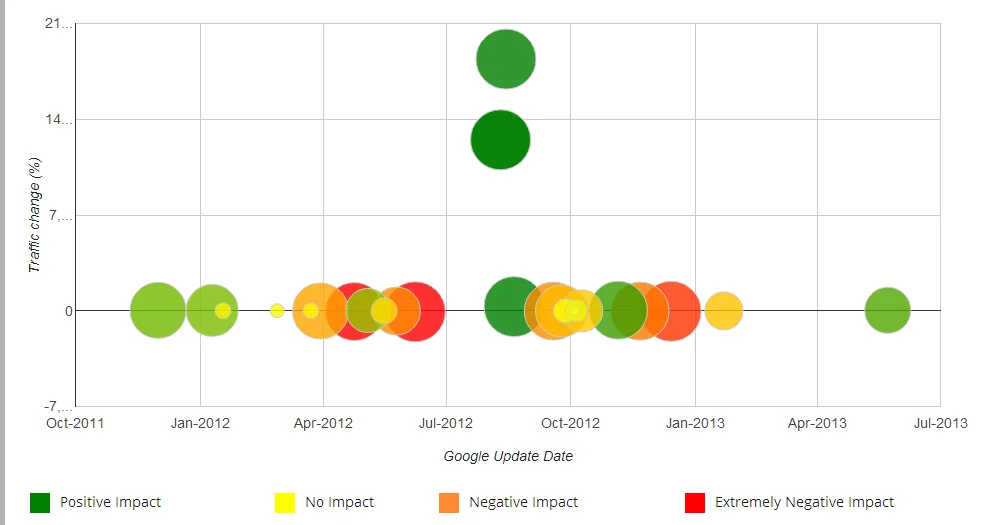
A Google penalty checker tool may identify unusual ranking patterns, but it generally cannot establish the exact cause by itself.
This distinction matters because the appropriate Google penalty fix depends on the underlying problem.
Common Causes Behind SEO Penalties
Search-engine spam systems are designed to identify behavior that violates applicable policies. SEO problems can arise from practices such as manipulative link building, deceptive redirects, large-scale low-value content, or other forms of search manipulation.
A proper investigation should therefore examine:
Unnatural backlinks
Review links created specifically to manipulate rankings. Look for suspicious patterns rather than judging every low-authority link as harmful.
Low-value or manipulative content
Thin pages, doorway-style pages, automatically produced content without sufficient value, or content created primarily for search manipulation may require review.
Cloaking and deceptive redirects
Search engines and users should not be intentionally shown substantially different content without a legitimate reason.
Site security problems
Hacked pages or injected spam can create serious search visibility issues even when the site owner did not intentionally create the content.
Google Penalty Recovery: A Practical Process
Google penalty recovery begins by identifying the actual problem and correcting its cause. Simply deleting pages or disavowing links without evidence can make an already difficult situation worse.
A practical recovery process includes:
Step 1: Document the decline
Record when traffic and rankings changed. Separate branded traffic from non-branded traffic and identify the pages most affected.
Step 2: Check for manual actions
If a manual action exists, read the explanation carefully and identify the specific issue that needs correction.
Step 3: Audit the website
Review technical SEO, content, internal links, redirects, indexing, security, and backlinks.
Step 4: Correct the underlying issue
Remove or improve problematic content, resolve technical errors, address security issues, and correct practices that violate search guidelines.
Step 5: Request reconsideration when applicable
For a manual action, follow the platform's documented reconsideration process after making genuine corrections.
Step 6: Monitor recovery
Track impressions, rankings, clicks, indexing, and organic conversions after the corrections.
The goal of Google penalty removal is not simply to make a ranking graph rise. The objective is to resolve the underlying issue and restore a technically sound, useful website.
When Should You Hire a Google Penalty Consultant?
A Google penalty consultant can be useful when the cause of a traffic decline is unclear, the website has a complex backlink profile, or a manual action involves a large number of pages.
A qualified Google penalty expert should be able to explain:
- What evidence supports the diagnosis
- Which pages or practices are affected
- What should be changed
- Why the recommended changes address the problem
- How recovery will be monitored
Be cautious of providers promising guaranteed rankings or instant recovery. SEO recovery depends on the underlying issue, the scale of the problem, and how search engines process subsequent changes.
A Google penalty removal agency or Google penalty services provider should therefore offer a transparent audit rather than simply selling a predetermined fix.
What Is a Penalty Checker Tool?
A Google penalty checker tools search may return services that compare ranking trends with known search-engine updates or analyze website signals.
These tools can be useful for investigation, but they should be treated as diagnostic aids.
A good domain penalty checker can help you ask better questions:
- Did visibility change suddenly?
- Which pages lost traffic?
- Which keywords were affected?
- Did the decline coincide with a known search change?
- Did the website undergo a technical or content change?
The answers still need to be validated using actual website data.
Some tools also refer to a Google sandbox and penalty checker tool, combining discussions of new-site visibility with penalty analysis. These are separate concepts and should not automatically be treated as the same issue.
Google Penalty Advice for US Businesses
For businesses operating in the United States, a search visibility decline can affect lead generation, ecommerce sales, and local discovery.
A local business should review more than organic rankings. Check:
- Google Business Profile visibility
- Local landing pages
- Reviews
- Local citations
- Local backlinks
- Organic service pages
- Technical indexing
- Local search intent
If your website depends heavily on location-based searches, broader local SEO strategies should be reviewed alongside any suspected penalty.
Likewise, businesses relying on organic search for lead generation may benefit from comparing SEO with paid advertising strategies while recovery work is underway.
SEO Penalty Terms That Are Unrelated to Google
Keyword research for “penalty checker” can produce unrelated searches. These should not be forced into an SEO article simply because they appear in a keyword list.
For example, pathfinder 1e armor check penalty, armor check penalty pathfinder, pathfinder armor check penalty, and pf2e armor check penalty relate to tabletop role-playing game rules rather than website SEO.
Similarly, searches such as fraudulent checks penalty, penalty for stealing and forging a check, forged check penalty, penalty for forging a check, dishonored check penalty, increase in dishonored check penalty, penalty for stealing social security checks, and what is the penalty for cashing a stolen check concern financial or legal topics rather than search-engine penalties.
The query do civil penalties show up on background checks is also a separate legal/background-screening question.
These phrases may exist in keyword research data, but including them in an SEO penalty guide would reduce topical relevance. A useful content strategy prioritizes search intent over blindly inserting every related keyword.
How to Identify and Resolve Search Engine Penalties
If you are wondering how to identify and resolve search engine penalties, use a structured investigation rather than making multiple changes simultaneously.
Start with:
- Search-engine notifications
- Traffic and ranking history
- Index coverage
- Technical SEO
- Content quality
- Backlink profile
- Security
- Recent website changes
- Competitor movement
- Relevant search-system changes
This process can help distinguish genuine SEO penalties from ordinary ranking volatility.
If the website has genuinely suffered a manual action, the recovery process should address the specific issue described by the search engine rather than applying a generic Google penalty service.
Preventing Future SEO Penalties
Prevention is easier when SEO decisions are documented and reviewed regularly.
Follow these practices:
- Create content for users first
- Avoid manipulative link schemes
- Monitor unusual backlink patterns
- Keep important pages technically accessible
- Review indexing regularly
- Protect the website against hacking
- Avoid deceptive redirects and cloaking
- Update outdated content
- Monitor significant traffic changes
- Keep SEO and development teams aligned
For businesses publishing large amounts of content, a strong content strategy is particularly important. Professional SEO guidance, such as the principles discussed in law firm SEO strategies, can help organizations focus on useful, search-intent-driven pages instead of shortcuts.
Email can also support communication and content distribution during an SEO recovery project. An integrated email marketing strategy can help maintain audience engagement while organic visibility is being addressed.
Final Thoughts
A penalty checker is useful as a starting point, but it should never replace a proper SEO investigation. A traffic decline does not automatically mean that Google has penalized a website.
The most reliable approach is to review search-engine notifications, traffic history, rankings, indexing, technical SEO, content, backlinks, security, and recent site changes. If a genuine manual action exists, correct the documented issue and follow the appropriate recovery process.
For businesses in the United States, combining technical SEO, quality content, local search optimization, and careful monitoring can reduce the risk of confusing normal ranking changes with an actual penalty. The goal is not simply to remove Google penalty signals; it is to build a website that consistently provides useful, accessible, and trustworthy information.
6. FAQs
How do I know if my website has a Google penalty?
Check your search-engine webmaster account for manual-action notifications and compare traffic, rankings, indexing, technical changes, and backlink activity. A traffic decline alone does not prove a penalty.
Is there a reliable Google penalty checker?
Automated Google penalty checker tools can help identify unusual ranking patterns, but they cannot reliably diagnose every penalty or establish the exact cause. Website data and manual investigation are still necessary.
Can a Google penalty be removed?
Yes, when a manual action is involved, the appropriate approach is to correct the documented violation and follow the applicable reconsideration process. Recovery timing varies depending on the issue and subsequent search processing.
What is the difference between a penalty and an algorithm update?
A manual penalty involves a documented action against a site, while an algorithmic ranking change can affect visibility without a direct manual-action notification. Technical problems and changing search intent can also cause traffic losses.
Should I hire a Google penalty consultant?
A consultant can be useful when the cause of a significant ranking decline is unclear or the website has a complex technical, content, or backlink history. Choose a provider that explains its evidence and proposed corrective actions.
Can a penalty checker guarantee recovery?
No. A diagnostic tool can identify signals and patterns, but it cannot guarantee recovery. SEO performance depends on the underlying issue and how search systems respond after corrections.

Comments
No comments yet.