
SEO Marketing Strategy: A Practical Guide for Better Growth
29
Sep 2026
A website can publish useful content, earn backlinks, and still struggle to attract qualified visitors if its SEO activities are not connected to broader business goals. A successful seo marketing strategy turns search optimization into a structured marketing process rather than a collection of isolated tasks.
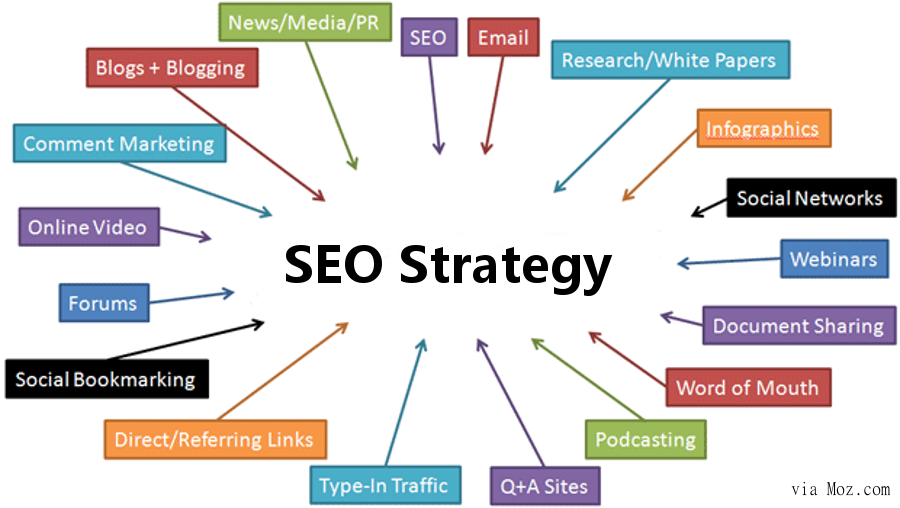
The goal is not simply to rank for more keywords. A strong strategy connects technical SEO, content, local visibility, authority building, conversion optimization, and measurement so that organic search supports real business objectives.
For US businesses, this also means understanding how people search across Google, mobile devices, local results, featured snippets, AI-generated answers, and traditional search listings. This guide explains how to build an SEO strategy that works alongside content marketing, paid search, email, and other acquisition channels.
What Is an SEO Marketing Strategy?
An SEO marketing strategy is a planned approach to improving a website's visibility in organic search while supporting broader marketing and business objectives. It combines keyword research, technical optimization, content creation, internal linking, authority building, local SEO, conversion improvements, and performance measurement.
Instead of treating SEO as a standalone activity, businesses should ask: how should SEO be done in a broader marketing strategy?
The answer starts with business objectives.
For example, a company may want to:
- Increase qualified organic traffic
- Generate more leads
- Improve visibility for commercial searches
- Reach customers in specific locations
- Build topical authority
- Support product or service launches
- Reduce dependence on paid acquisition
- Improve visibility in AI-powered search experiences
These goals should determine the SEO campaigns, content priorities, and measurement framework.
How to Build an Effective SEO Marketing Strategy
A practical SEO growth strategy can be organized into several connected stages.
1. Define Your Marketing Objectives
SEO works better when its purpose is measurable.
An example of a marketing objective for an SEO audit could be: identify technical and content issues that prevent important service pages from gaining organic visibility, then prioritize fixes according to business impact.
Other website objectives examples include increasing qualified leads, improving visibility for high-intent searches, or expanding into a new geographic market.
Your SEO business plan should therefore connect search metrics with meaningful outcomes rather than focusing only on rankings.
Some teams use seo ziele, seo strategien, or a plan de seo to document these goals and priorities. Whatever terminology is used, the underlying principle is the same: define what SEO needs to accomplish before deciding what to optimize.
2. Research Search Intent and Topics
Keyword research should identify more than individual phrases. It should uncover the questions, problems, comparisons, and commercial needs behind searches.
Organize keywords according to intent:
Search intent
Typical purpose
Example
Informational
Learn something
What is technical SEO?
Commercial
Compare solutions
Best SEO agency for small business
Transactional
Take action
Hire an SEO consultant
Navigational
Find a specific site
Econix Digital
Local
Find nearby services
SEO agency near me
This structure makes it easier to develop content marketing for organic search instead of producing disconnected blog posts.
3. Build Topic Clusters
A modern website should demonstrate depth around important subjects.
For example, an SEO agency could create a central page about SEO services supported by related content covering technical SEO, local SEO, ecommerce SEO, content optimization, link building, AEO, and analytics.
This supports the content marketing and SEO relationship because useful content can satisfy informational searches while strengthening the relevance of important commercial pages.
Businesses looking for content marketing solutions that are SEO-focused should prioritize useful, original information rather than creating articles solely because a keyword has search volume.
The strongest modern SEO best practices for content marketing include:
- Matching content to search intent
- Covering topics comprehensively
- Answering questions directly
- Demonstrating first-hand expertise where appropriate
- Maintaining accurate information
- Improving internal linking
- Updating outdated pages
- Creating content for humans rather than search engines alone
Content Marketing and SEO Should Work Together
SEO and content marketing are closely connected, but they are not identical.
SEO helps search engines discover, understand, and evaluate pages. Content marketing provides the information users actually consume.
There are many practical ways to combine them. Here are 8 ways content marketing and SEO can work together:
- Use keyword research to identify content opportunities.
- Create content around genuine customer questions.
- Build topic clusters around important services.
- Link informational articles to relevant commercial pages.
- Refresh older content when search intent changes.
- Optimize content for featured snippets and direct answers.
- Use original insights and examples to strengthen authority.
- Measure both organic visibility and business conversions.
A useful seo and content marketing toolkit may include keyword research software, search performance data, crawling tools, analytics, content briefs, internal-linking systems, and editorial workflows.
The relationship can also extend to content marketing for seo and aeo, where pages are structured to answer questions clearly for both traditional search and answer engines.
This is the practical idea behind infusing seo content marketing: SEO considerations are built into content planning from the beginning rather than added after an article is written.
Technical SEO Is the Foundation
Technical SEO helps search engines crawl, render, understand, and index a website efficiently. It also affects how users experience the site.
Key areas include:
- Crawlability
- Indexation
- Site architecture
- Canonical URLs
- XML sitemaps
- Page speed
- Mobile usability
- Structured data
- Internal links
- HTTPS
- Duplicate-content management
One of the most important questions in a technical audit is what business owners need to know about technical SEO. The answer is that technical work should be prioritized according to its impact on discoverability, usability, and business-critical pages.
Mobile optimization deserves particular attention because many searches occur on smartphones. Search behavior can even appear in highly specific queries such as スマホ seo or mobile beekeeping seo mobilecrative, demonstrating how varied mobile-related search terminology can become.
Technology in SEO also continues to evolve as websites adopt JavaScript frameworks, structured data, AI-assisted workflows, and new search interfaces.
SEO, PPC, and the Broader Marketing Mix
SEO and paid search can complement one another.
A common question is, is SEM paid search? In common industry usage, SEM can refer broadly to search engine marketing, while paid search is the advertising component of search marketing. Terminology varies between organizations, so businesses should define the channels they include.
A combined digitales marketing seo ppc approach can use paid campaigns for immediate visibility while SEO builds longer-term organic assets.
Similarly, seo und ppc marketing can share useful information. Paid-search query data can reveal commercial language, while SEO can identify topics worth developing into long-term content.
Paid advertising can also support campaigns where organic visibility takes time. Businesses can explore the paid acquisition side of their strategy through Econix Digital's paid advertising services.
Local SEO for US Businesses
Local SEO is especially relevant for businesses serving specific cities, regions, or service areas.
A local strategy may include:
- Google Business Profile optimization
- Consistent business information
- Location-specific service pages
- Relevant local citations
- Customer reviews
- Locally relevant content
- Local backlinks
- Strong on-page location signals
The goal is to make the business relevant when potential customers search for services in a particular area.
For businesses targeting local customers, a dedicated local SEO approach can work alongside the broader seo marketing strategy.
Optimize for AEO, GEO, and AI Search
Search is increasingly becoming an answer-oriented experience. Users may receive direct answers, summaries, or generated responses before visiting multiple websites.
Answer Engine Optimization (AEO) focuses on making information easy for answer systems to understand and retrieve. Generative Engine Optimization (GEO) similarly focuses on improving the likelihood that useful content can be represented accurately within generative search experiences.
Useful answer engine optimization best practices 2025 2026 and answer engine optimization best practices 2026 include:
- Answer important questions directly.
- Use descriptive headings.
- Keep definitions concise.
- Support claims with trustworthy information.
- Organize complex subjects into logical sections.
- Use lists and tables when they improve clarity.
- Maintain clear entity and topic relationships.
- Keep important pages accurate and updated.
The same principles apply when considering ai seo best practices 2025 2026. The objective should not be to write for a machine at the expense of readers. Clear, useful, trustworthy content benefits both.
Ecommerce and New-Domain SEO
Ecommerce websites require additional attention to category pages, product pages, filters, internal links, structured data, and commercial search intent.
Businesses researching ecommerce seo best practices 2026 should focus on making category and product information genuinely useful while maintaining a technically clean architecture.
New websites face a different challenge. New domain seo strategies 2026 should prioritize crawlability, useful foundational content, internal linking, brand/entity signals, and realistic topic targeting rather than expecting immediate authority.
A new domain should build relevance progressively around the subjects that matter most to its customers.
Measure SEO Against Business Outcomes
A strategy needs measurement to determine what is working.
Useful metrics can include:
- Organic clicks and impressions
- Non-branded search visibility
- Qualified organic leads
- Conversion rate
- Revenue attributed to organic search
- Engagement on key landing pages
- Indexed-page health
- Organic visibility by topic
- Local search performance
If statistics are down, avoid making changes based on one metric alone. A seo company what to say when statistics are down should begin by identifying whether the decline involves rankings, impressions, clicks, seasonality, indexing, technical problems, or changes in search behavior.
An SEO audit should therefore produce prioritized actions rather than a long list of technical observations.
Common SEO Mistakes to Avoid
A sustainable strategy avoids several common problems:
Publishing Without a Purpose
Every important page should have a clear audience, search intent, and business role.
Chasing Every Trend
Search trends change quickly. Queries such as seo marketing shocking facts, tendencias seo en 2025, and seo25 may reflect interest in emerging topics, but trends should not automatically replace fundamental SEO work.
Ignoring Conversion Paths
Traffic has limited business value if visitors cannot easily understand the offer or take the next step.
Treating SEO as a One-Time Project
SEO requires ongoing monitoring, testing, updating, and technical maintenance.
Using Irrelevant Keywords
A keyword should fit the page and the audience. Terms such as seo campaigns volcano controller leopthme, fmshobby.com seo audit recommendations 2026, or arva health effective seo strategies 2026 may represent highly specific searches or research queries, but they should only be addressed when genuinely relevant to the subject.
SEO in Specialized Marketing Situations
SEO principles can apply across industries, but the strategy changes according to the audience and regulatory environment.
For example, someone researching can seo help your political campaign is asking about organic visibility in a political context. The technical fundamentals remain similar, but content, claims, compliance, audience trust, and reputation require additional care.
Likewise, searches for seo promotions, seo service highsoftware99.com, or 99 positions seo may indicate commercial research into SEO services or specific providers. Before selecting a provider, businesses should examine its methodology, communication, reporting, technical process, content standards, and transparency rather than relying on promotional claims alone.
A Practical SEO Strategy for 2026
A useful framework for implementing your strategy is:
- Define business and marketing objectives.
- Audit the current website.
- Research customers, competitors, topics, and search intent.
- Build keyword and topic clusters.
- Fix critical technical SEO issues.
- Improve important commercial pages.
- Create useful supporting content.
- Strengthen internal linking.
- Develop relevant authority and local signals.
- Optimize content for direct answers and AI search.
- Connect SEO with PPC, email, and other marketing channels.
- Measure results and continuously refine priorities.
This approach supports seo content optimization strategies 2026 while leaving room to adapt as search behavior changes.
The same framework can be documented as seo requirements strategy 2026 so writers, developers, marketers, and business owners understand what each page needs to accomplish.
Conclusion
A successful seo marketing strategy is not simply a list of keywords or a race for higher rankings. It is a connected marketing system that combines technical health, useful content, search intent, authority, local visibility, conversion paths, and ongoing measurement.
The strongest approach is to build around genuine customer needs, connect SEO with content marketing and paid channels, and prepare important pages for both traditional search and answer-oriented experiences.
For specialized industries, local businesses, ecommerce brands, and new domains, the exact tactics will differ. The underlying principle remains consistent: create a technically accessible website with trustworthy, useful information that clearly satisfies the needs behind the search.
Businesses that want to deepen their strategy can also explore resources covering [law firm SEO strategies], [local SEO], [email marketing], and [paid advertising] as part of a broader digital marketing framework.

Comments
No comments yet.