
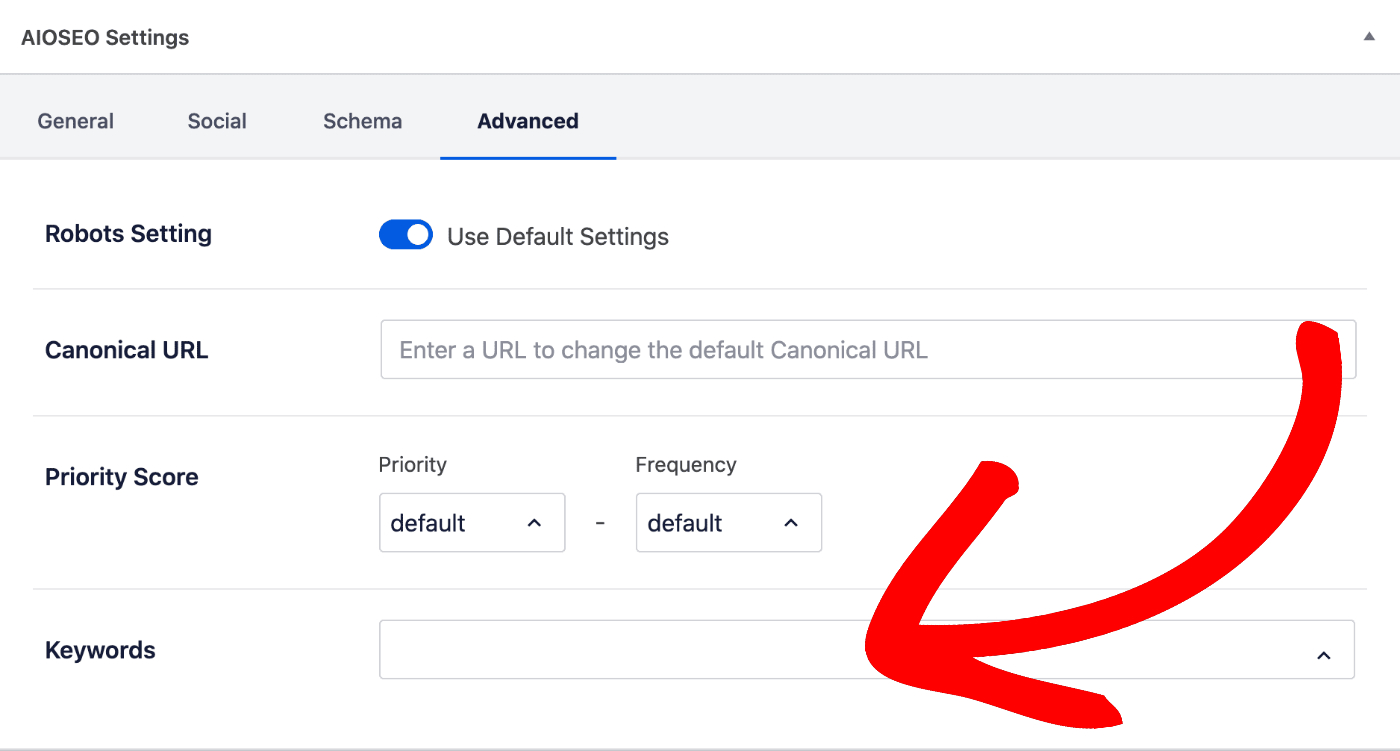
Open an older SEO checklist and you'll probably still see a line about adding meta keywords to every page. That advice is outdated, but it keeps resurfacing in guides, plugins, and CMS settings — which leaves a lot of site owners wondering whether meta keywords seo is something they should still bother with.
This article explains what the meta keywords tag actually is, why search engines stopped using it, the difference between meta tags and keywords more broadly, and what to prioritize instead if your goal is better rankings.
What Are Meta Keywords in SEO?
Meta keywords are an HTML meta tag that once let website owners list target keywords directly in a page's code, intended to tell search engines what the page was about. The tag looks like this in HTML: <meta name="keywords" content="keyword one, keyword two">.
Search engines no longer use meta keywords as a ranking factor. Google confirmed this back in 2009, and the tag has had no impact on Google search rankings since. Bing has also stated it does not use the meta keywords tag as a ranking signal, and largely ignores it or treats it as a possible spam indicator when overused.
Why Meta Keywords Stopped Working
The meta keywords tag was abandoned by search engines because it was too easy to abuse. Site owners could stuff dozens of irrelevant keywords into the tag to try to rank for terms that had nothing to do with the actual page content.
This created a problem: the tag became a poor and manipulable signal rather than a useful one. Search engines moved toward evaluating actual page content, backlinks, and user behavior instead of relying on self-reported metadata that any site owner could fill in however they wanted.
So when people ask do meta keywords work or whether do keywords matter anymore in this specific tag — the direct answer is no, not for Google or Bing rankings.
Meta Tags vs Keywords: Understanding the Difference
This is where a lot of confusion comes from, since "meta tags" is a broad category and "meta keywords" is just one specific tag within it.
Meta Tag
Still Matters for SEO?
Purpose
Title tag
Yes
Shown in search results, strong ranking signal
Meta description
Indirectly
Not a direct ranking factor, but affects click-through rate
Meta keywords
No
Ignored by Google and Bing
Meta robots
Yes
Controls indexing and crawling behavior
Canonical tag
Yes
Prevents duplicate content issues
A common question is are meta descriptions a ranking factor for Google — they are not used directly to determine rank, but a well-written description improves click-through rate from search results, which can indirectly support performance over time.
Meta Title, Description, and Keywords: Best Practices
For the tags that do matter, keep these in mind:
- Title tag: 50–60 characters, includes the primary keyword naturally, unique per page
- Meta description: 140–160 characters, written to earn the click rather than stuffed with terms
- Meta keywords: Optional to include for legacy or internal CMS search purposes, but skip it as an SEO tactic
Should You Still Use Meta Keywords in 2026?
You can include the meta keywords tag without it hurting your SEO, but adding it provides no ranking benefit on Google or Bing. If your CMS includes a metadata keywords field by default, leaving it blank is fine.
There are a few narrow cases where the tag or its equivalent still serves a purpose:
- Internal site search: Some CMS platforms use "keywords" or "tags" fields to power on-site search filtering, separate from actual SEO
- Some smaller or regional search engines: A handful of lesser-used search engines outside Google and Bing may still reference the tag, though this is inconsistent and not something to build a strategy around
- Content organization: Site tags, keywords, and categories used purely for organizing content into topics still have UX value, even without SEO weight
How Meta Keywords Fields Work Across CMS Platforms
Several content management systems still include a meta keywords field, largely as a legacy holdover.
WordPress
Meta keywords in WordPress aren't part of core functionality but can be added through certain plugins. Most SEO plugins, including the meta keywords template in Yoast, either removed the meta keywords field entirely or hide it by default, since Yoast's own guidance reflects that the tag carries no ranking value.
Weebly
Meta keywords in Weebly can be set on individual pages through the SEO settings panel. The field still exists in the interface, but functions the same as anywhere else — it has no effect on Google or Bing rankings.
Magento, PrestaShop, and OpenCart
E-commerce platforms tend to retain meta keywords fields the longest. Meta keywords in Magento, PrestaShop meta keywords, and OpenCart meta tag keywords fields are all present in their respective admin panels, largely because these platforms were built when the tag still had relevance. An OpenCart meta tag keywords example would follow the same format as any other platform — a comma-separated list in a dedicated field — but the output has no bearing on search visibility.
Formatting Note
If you do choose to fill in a legacy keywords field, meta keywords commas should separate each term, written as a simple comma-separated list. There's no meaningful limit on how many meta keywords you can include, since the field isn't processed for ranking purposes by major search engines, but there's also no reason to add more than a handful for organizational clarity.
What to Focus on Instead of Meta Keywords
Since meta keywords SEO no longer influences rankings, put that effort into tags and practices that do:
- Write unique, descriptive title tags for every page, incorporating your primary keyword naturally
- Craft compelling meta descriptions that earn clicks rather than just describing the page
- Use header tags (H1, H2, H3) properly to structure content and signal topic relevance
- Build internal links with descriptive anchor text connecting related pages
- Focus on content quality and depth that fully answers what searchers are looking for
- Optimize images with descriptive alt text, which supports both accessibility and image search visibility
These elements carry real weight with search engines, unlike the keywords meta tag.
A Quick Historical Note
For context, meta keywords SEO advice from as far back as 2018 already reflected the tag's declining relevance — Google had confirmed it ignored the tag nearly a decade earlier. If you're following an SEO guide that still emphasizes meta keywords, treat that as a signal the guide itself may be outdated in other areas too.
Meta tag icon settings, favicons, and other visual metadata elements are unrelated to the keywords tag and serve different purposes entirely, mostly around browser display and bookmarking rather than search ranking.
Skipping meta keywords won't hurt your SEO in 2026, and filling it in won't help. The tag is effectively inert. Time spent optimizing title tags, meta descriptions, content structure, and internal linking will do far more for your rankings than anything related to que es meta keywords or how it's configured.
FAQs
Are meta keywords still relevant for SEO in 2026?
No. Google has ignored the meta keywords tag as a ranking factor since 2009, and Bing has stated it does not use it either. The tag has no impact on search rankings today.
Does Bing use meta keywords for ranking?
No. Bing has publicly stated it does not use the meta keywords tag as a ranking signal and may treat excessive keyword stuffing in the tag as a potential spam indicator.
How many meta keywords should I use per page?
There's no required or recommended number, since the tag isn't used for ranking by major search engines. If you include it for organizational purposes, a short, relevant list is sufficient.
What's the difference between meta description and keywords?
The meta description is a short summary shown in search results that can influence click-through rate. The meta keywords tag is a separate, ignored field that once listed target terms for a page.
Should I remove the meta keywords tag from my site?
It's not necessary to remove it, since it does no harm sitting unused. Leaving it blank or removing it entirely has no negative effect on rankings either.
Do search engines other than Google and Bing use meta keywords?
A small number of lesser-used search engines may reference the tag, but this isn't consistent or significant enough to base an SEO strategy around.
What should I focus on instead of meta keywords?
Prioritize unique title tags, compelling meta descriptions, proper header structure, quality content, and internal linking — all of which directly influence how search engines evaluate and rank your pages.

Comments
No comments yet.